How to Properly Test Hormones in Cycling Women—and Why It Matters
When it comes to understanding hormonal symptoms—like fatigue, PMS, irregular cycles, heavy periods, or fertility struggles—proper testing is the first step to lasting healing.
Unfortunately, most conventional hormone tests fall short. A single blood draw on one random day of your cycle? That gives about as much insight as peeking through a keyhole to assess an entire house. It may tell you something—but it won’t tell you everything.
The Truth: Your Hormones Are in Constant Motion
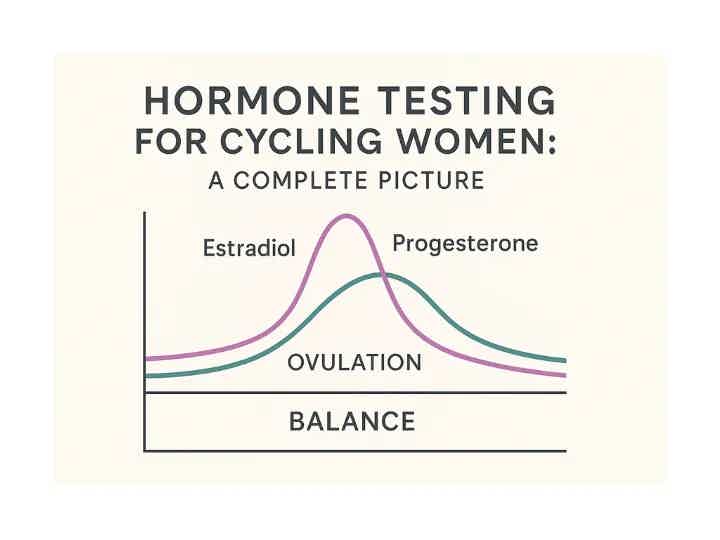
In a healthy cycle, estrogen and progesterone follow a carefully choreographed rhythm.
Estrogen (specifically estradiol) rises in the first half of the cycle to stimulate ovulation.
Progesterone rises in the second half to prepare the body for potential pregnancy.
Testing hormones on just one day (usually day 3 or 21) misses the broader story. It’s like trying to evaluate a movie by watching only one scene.
The Better Way: Functional Hormone Testing Over the Full Cycle
At Mindful Nutrition for Life, we use comprehensive hormone testing that maps hormone patterns across the entire cycle.
We recommend:
Saliva-based hormone testing: such as the eFHP panel by DiagnosTechs
Dried urine testing: such as the DUTCH Cycle Mapping test
Both allow us to track estrogen, progesterone, LH, FSH, DHEA, and testosterone across multiple days—showing us when (and if) you ovulate, how well your body produces and balances hormones, and whether communication between your brain and ovaries is working.
What These Tests Reveal:
- Whether your hormone levels are too high or too low
- Whether you're ovulating (and when)
- If estrogen dominance is contributing to symptoms
- If progesterone is rising and sustaining properly
- If your pituitary gland is signaling correctly (HP-G axis function)
- If conditions like PCOS, amenorrhea, or perimenopause might be at play
From Data to Healing: What Happens Next?
Once we have this information, we create a customized strategy to support you. This might include:
- Nutritional shifts to support hormone production
- Detoxification support to reduce hormone overload
- Herbal or nutrient-based protocols to rebalance hormone signaling
- Gut, adrenal, and liver support if deeper imbalances are involved
You get answers—and a path forward that goes far beyond symptom suppression.
You Deserve to Know What’s Really Going On
If you’ve been told “everything looks normal” but you feel far from it, it’s time to get a full picture.
📞 Want to learn more or see if this testing is right for you?